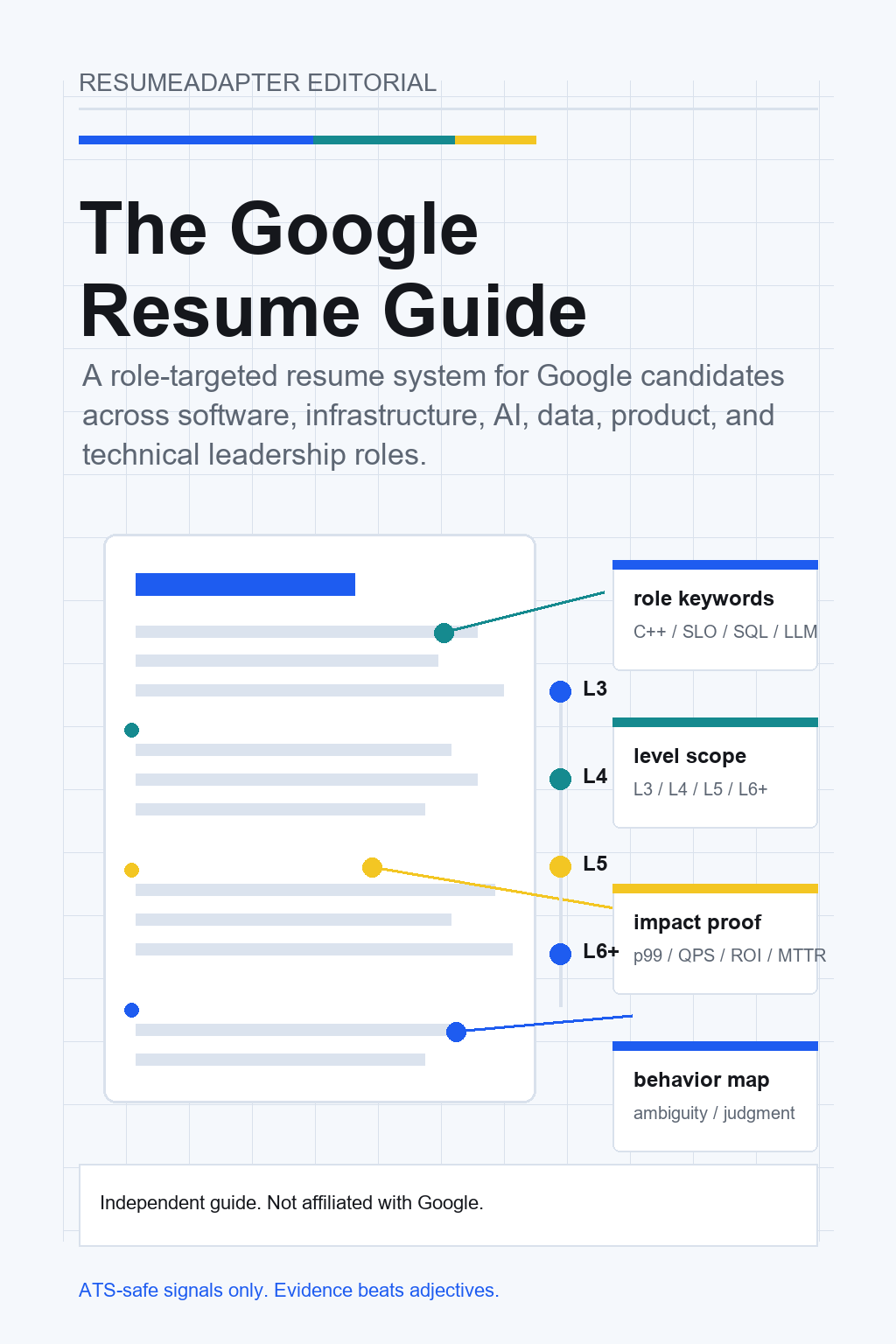
Google does not use a third-party applicant tracking system. There is no Workday, no Taleo, no iCIMS, no Greenhouse, no Lever in the path to a Google role. You apply by creating a Google Careers Profile on google.com, and your application goes to Google Staffing, Google's internal recruiting org. The screen is a human recruiter, not a keyword gate.
One common point of confusion: Google Hire was a separate ATS product that Google sold to small businesses, and it was discontinued on September 1, 2020. It was never the system Google uses to hire its own employees. So when a guide claims you must beat "Google's ATS," it is describing a filter that does not exist on the path to a Google job.
Because review is human and Google receives roughly 50,000 resumes a week, the failures that matter are the ones a person reacts to in seconds. Former Google SVP of People Operations Laszlo Bock, writing in "Work Rules!", says resumes are discarded for quality mistakes: typos, sloppy or overly creative formatting, excessive length, leaking confidential information, and lies. That is a judgment call, not a keyword filter. The mechanical hygiene still matters for the parser that ingests your file, single column, standard section headers, a real text layer, but it is necessary, not sufficient.
The sufficient condition is content a hiring committee can score cold: quantified scope and impact mapped to the four hiring attributes below. Clean formatting gets you read; measurable outcomes get you advanced.