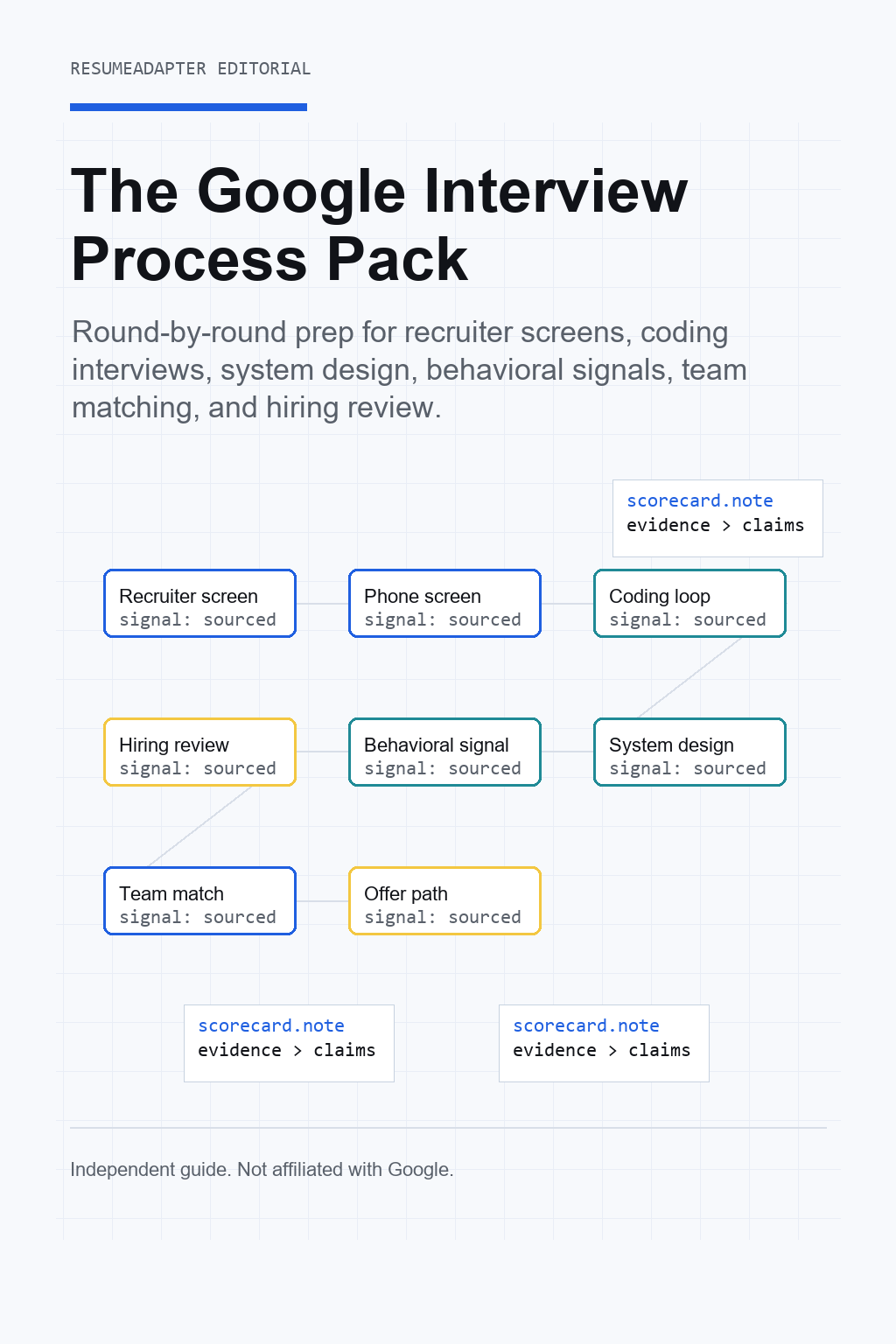
Google has no third-party ATS. You apply through a Google Careers profile on google.com to Google Staffing, and a human recruiter reviews the application. That single fact reshapes how the first stage works: there is no keyword robot to game, there is a person triaging a queue who needs to read role fit fast. Every stage after that is calibrated against the same four attributes the company scores on, sampled by different interviewers so no single conversation decides the outcome.
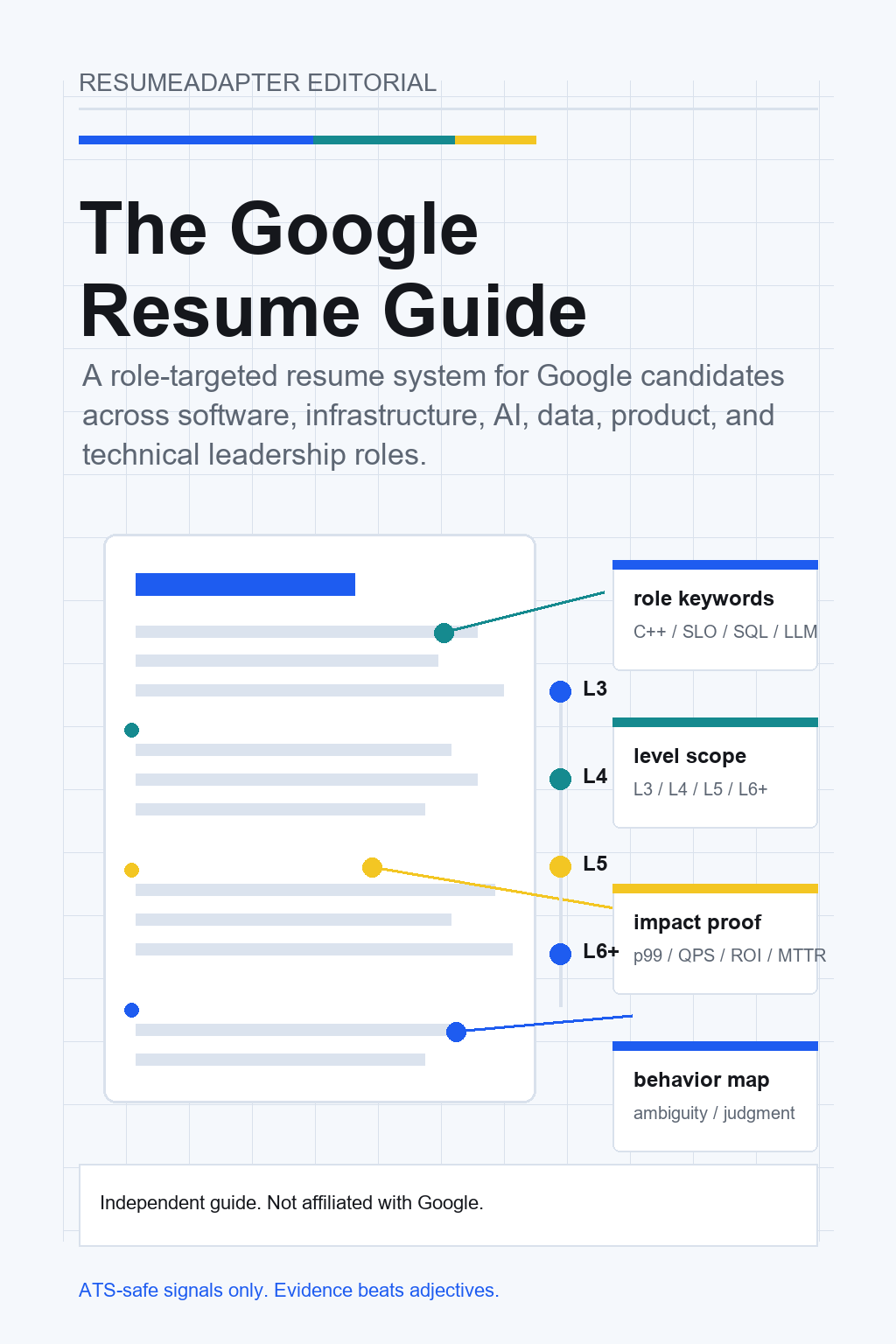
Each stage below is shown three ways. What happens is the mechanics: how long, what format, who is in the room. What it assesses is the attribute the stage is calibrated to measure. The resume implication is the part most candidates miss, because the resume is not just the screen-stage artifact. Interviewers open from it in the loop, and the hiring committee reads it cold at the decision stage, so a single resume line can do work in three different stages.
The two most distinctive stages are the hiring committee and team matching, and both get a dedicated explainer further down. The committee is why the hiring manager cannot simply decide to hire you: a group of senior Googlers who never met you reviews the packet and makes the recommendation. Team matching is why you can pass everything and still wait: approval clears the bar, but an offer needs a team with open headcount to claim you.
Two notes on calibration. The score scale interviewers use is commonly reported as 1 to 4, and a roughly 3.5 average is often cited as the bar, but treat both as reported by interview-prep sources, not as figures Google officially publishes. What Google does document, through Google re:Work and Laszlo Bock's Work Rules!, is the structured-interviewing machinery: vetted questions, standardized rubrics, recorded written feedback, and interviewer calibration that tracks historical scoring so a harsh grader gets corrected toward the mean.