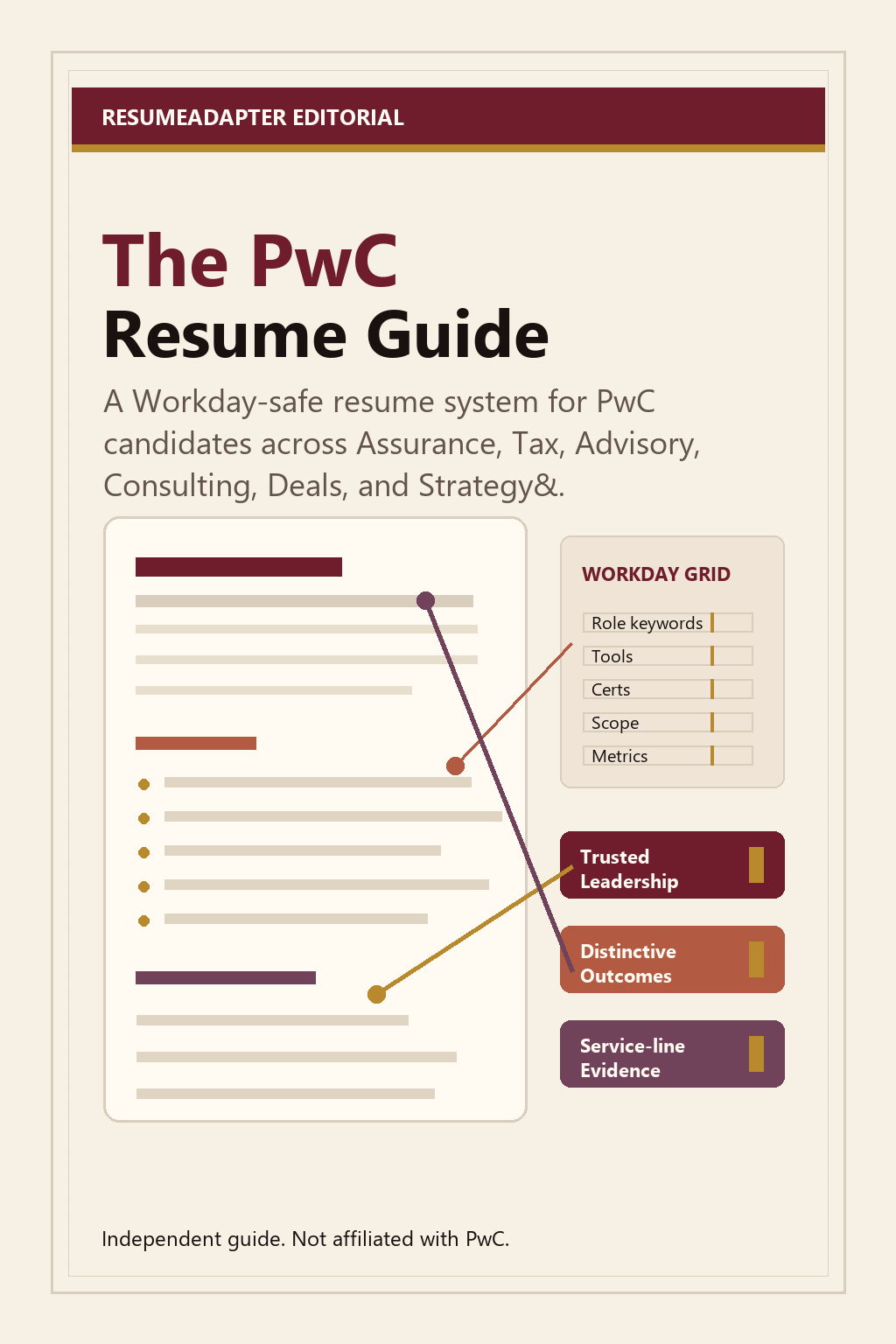
PwC US's hiring runs on Workday, the same applicant tracking vendor that powers NVIDIA, Morgan Stanley, and Accenture. The careers site lists the role, but the apply button takes you to PwC's Workday tenant at pwc.wd3.myworkdayjobs.com, where you create a candidate profile and submit, so a real vendor parser reads your resume before a recruiter does. It is not Taleo, not Oracle, and not a proprietary system.
One nuance worth naming, because it trips people up. jobs.us.pwc.com is built on Radancy, a recruitment-marketing platform that runs the branded career site and the job search. It is the storefront, not the parser. The moment you click apply, you land in Workday (US_Experienced_Careers for experienced hires, Global_Campus_Careers and US_Entry_Level_Careers for campus), and that is where your resume is read. Optimize for Workday, not for the marketing site.
What that changes: because a vendor ATS ranks your resume before any human, the mechanics matter twice over. Use a single column, keep contact details in the body rather than the header, use a real text layer with standard section headers like Experience, Education, and Skills, avoid tables, text boxes, and graphics, ship a DOCX or a clean text-layer PDF, and mirror the posting's exact titles and skills so the parser ranks the file. The assessment and interviews are later, separate stages, not the resume screen.
The sufficient condition is content that proves value: a specific, quantified client or program outcome on every line, mapped to The PwC Professional below. Keyword-matched formatting gets you ranked and read; demonstrated impact gets you advanced.