ResumeAdapter
Updated 2026-06-11

The principles JPMorgan hires against
and the four tenets above them.

Why this matters

JPMorgan publishes Our Business Principles: 20 numbered principles under four tenets. Exceptional client service, operational excellence, a commitment to integrity, and a great team and winning culture. They are the ownable finance analog to Amazon's leadership principles. This page maps the highest-signal ones to resume language, with a show-this bullet, the anti-pattern to delete, and a STAR example, across banking and technology.

Scan my JPMorgan resumeFree to scan20 principles, 4 tenetsBanking and tech
By the numbers
What JPMorgan publishes
20
Business Principles, numbered 1 to 20
The tenets
4
Client, operations, integrity, team
The standard
Fortress
Balance sheet, never compromised
Source
jpmorganchase.com
Primary, firm-published

The quick answer

What are JPMorgan's business principles?

JPMorgan publishes Our Business Principles: 20 numbered principles grouped under four tenets. The first tenet, Exceptional Client Service, opens the framework on we focus on the customer. The second and largest, Operational Excellence, runs from setting the highest standards of performance through demanding financial rigor and risk discipline and always maintaining a fortress balance sheet, to executing with both skill and urgency. The third, a commitment to integrity, fairness and responsibility, opens on we will not compromise our integrity and we face facts. The fourth, a great team and winning culture, covers hiring great, diverse employees, teamwork, an open meritocracy, honest communication, and good leadership. The 20 principles are the firm's published cultural framework, the finance analog to a numbered leadership-principles list. On a resume, they translate to five moves: lead with measurable client impact, prove operational excellence with precise numbers, quantify the risk you contained, prove integrity through a costly action, and credit the team you lifted. Scan your resume to see which of these signals a JPMorgan recruiter would actually find. Scan your JPMorgan resume.

JPMorgan Chase publishes Our Business Principles: 20 numbered principles grouped under four tenets, exceptional client service, operational excellence, a commitment to integrity, fairness and responsibility, and a great team and winning culture. The first principle is we focus on the customer, the fifth demands financial rigor and risk discipline and a fortress balance sheet that is always maintained, and the eleventh is we will not compromise our integrity.

The heritage runs deep. In 1913, Jack Morgan framed the firm around the idea of doing only first class business, and that in a first class way. The popular short form, first-class business in a first-class way, is a paraphrase, so the exact sentence is the one worth quoting. A century later, JPMorgan Chase publishes that ethos as a structured framework: Our Business Principles.

The framework is 20 numbered principles grouped under four tenets, exceptional client service, operational excellence, a commitment to integrity, fairness and responsibility, and a great team and winning culture. It is the ownable finance analog to Amazon's leadership principles: a numbered, enduring list a firm genuinely screens its culture against, in banking and in technology alike.

The resume reading is the same for every principle: a JPMorgan reviewer indexes on the principle being visible in the bullet itself, not asserted as an adjective. A line that reads disciplined, high-integrity team player fails, because it names the principles instead of demonstrating them.

A line that reads built a stress test that caught a concentration breach and cut single-name exposure 25 percent passes, because it shows financial rigor and risk discipline in a result without ever using the word discipline. The entries below give you that pattern for the highest-signal principles, each with a show-this bullet, the anti-pattern, and a STAR example.

The principles a resume can prove

The highest-signal principles by tenet,
a show-this bullet, and a STAR example.

Not every one of the 20 principles maps to a resume bullet. These are the ones a JPMorgan reviewer can actually read in your work: client focus, operational excellence, the fortress-balance-sheet financial rigor and risk discipline, integrity, and teamwork. Examples span banking and technology, banking first.

01
High-signal 01

Exceptional Client Service

Principles 1 to 3: focus on the customer, operate field and client driven at the local level, and build world-class franchises by investing for the long term to serve clients.

The first tenet opens the whole framework on the customer. JPMorgan reads for people who anchor every decision in the client outcome, who operate close to the client rather than from a remote process, and who can show that serving the client well is what drove the result. A reviewer reads for client impact you can measure, not activity you performed.

What it signals in hiring
Show this on the resume

Lead with the client outcome and tie your work to it: a mandate won, assets raised, a relationship deepened, a problem the client felt solved. Put the client's result first, then your mechanism.

Owned the post-mandate workstream for a $400M financing, delivering the client's board materials two days early and earning a follow-on mandate.

Avoid this anti-pattern

Internal-process bullets with no client on the other side. Managed the deal pipeline describes activity, not the client outcome a client-first reviewer reads for.

Handled various administrative and operational tasks to support the broader deal process across the group.

STAR example bullet

When a client's financing risked slipping past their board date (Situation), I owned the diligence and materials workstream (Task), coordinating legal and the client's finance team to compress the timeline (Action), delivering two days early and earning a follow-on mandate (Result).

02
High-signal 02

Operational Excellence

Principles 4 to 10: set the highest standards of performance, demand financial rigor and risk discipline, build the best internal governance and controls, act like owners and partners, build the best systems and operations, stay disciplined in everything, and execute with both skill and urgency.

The largest tenet, seven principles, and the one a resume can prove most directly. JPMorgan reads for a high bar held consistently, ownership of the outcome, and execution that pairs skill with urgency. A reviewer reads for craft, rigor, and a result delivered on time, not adequate work eventually shipped.

What it signals in hiring
Show this on the resume

Prove the bar with precise numbers and a named improvement, and show you owned the outcome end to end. Pair the skill with the speed: what you built or fixed, by how much, and how fast.

Rebuilt the settlement reconciliation job to run in 40 seconds instead of 18 minutes, an approach the operations team adopted across four desks.

Avoid this anti-pattern

Vague, rounded impact with no mechanism. Improved efficiency and delivered high-quality work tells an excellence-driven reviewer nothing and reads as someone who did not measure.

Consistently delivered high-quality work and improved efficiency across a wide range of projects and deliverables.

STAR example bullet

When a nightly reconciliation job took 18 minutes and blocked the next batch (Situation), I owned the pipeline (Task), so I re-architected the query plan and added incremental processing (Action), cutting the run to 40 seconds and seeing it adopted across four desks (Result).

03
High-signal 03

Financial Rigor and Risk Discipline

Principle 5, the most resume-relevant inside Operational Excellence: demand financial rigor and risk discipline, and always maintain a fortress balance sheet.

JPMorgan singles out a fortress balance sheet as the standard it never compromises. The firm reads for people who quantify, who stress-test their own assumptions, and who size and manage risk rather than ignore it. A reviewer reads for evidence you protected the downside, not only that you chased the upside.

What it signals in hiring
Show this on the resume

Show that you measured the risk and acted on it: a limit you set, an exposure you cut, a stress case you ran, a control that contained a loss. Quantify the downside you prevented, not just the upside you produced.

Built a stress test that caught a concentration breach before quarter-end, cutting single-name exposure 25 percent and avoiding a limit excess.

Avoid this anti-pattern

Upside-only framing that never names risk. Drove aggressive growth with no mention of how it was sized or controlled reads against a fortress-balance-sheet culture.

Grew the book as fast as possible and pushed volume up across every product line.

STAR example bullet

When the book drifted toward a single-name concentration (Situation), I owned the risk review (Task), so I built a stress test that flagged the breach and proposed a hedge (Action), cutting exposure 25 percent and avoiding a limit excess before quarter-end (Result).

04
High-signal 04

Integrity, Fairness and Responsibility

Principles 11 to 15: never compromise integrity, face facts, have fortitude, foster respect, inclusiveness, humanity and humility, and help strengthen the communities where the firm works.

In a regulated firm where reputation is the asset hardest to restore, JPMorgan reads for people who do the right thing when it is costly, who face the uncomfortable fact rather than bury it, and who have the fortitude to hold the line. A reviewer reads for judgment under pressure, not slogans.

What it signals in hiring
Show this on the resume

Show a moment you protected the firm or the client by being rigorous or honest when it would have been easier not to: a control you tightened, an error you surfaced, a hard truth you raised. Demonstrate the judgment; do not assert the virtue.

Flagged a reconciliation break before settlement that others had signed off, preventing a $2M misstatement and prompting a new four-eyes control.

Avoid this anti-pattern

Naming integrity as an adjective. A line that calls you honest, ethical, and trustworthy states the trait the firm reads for instead of demonstrating it, and reviewers discount it.

Highly ethical professional with strong integrity and an unwavering commitment to always doing the right thing.

STAR example bullet

When a trade reconciliation looked balanced but felt off the day before settlement (Situation), I was responsible for sign-off (Task), so I re-ran the break analysis and escalated a discrepancy others had cleared (Action), preventing a $2M misstatement and prompting a new four-eyes control (Result).

05
High-signal 05

A Great Team and Winning Culture

Principles 16 to 20: hire, train and retain great, diverse employees, build teamwork, loyalty and morale, maintain an open, entrepreneurial meritocracy for all, communicate honestly, clearly and consistently, and strive to be good leaders.

The final tenet is about the unit, not the individual. JPMorgan reads for people who make the team win, who develop and retain talent, who communicate clearly under pressure, and who lead whether or not they hold the title. A reviewer reads for whether you carry the team's outcome and lift the people around you.

What it signals in hiring
Show this on the resume

Name the cross-functional partners and the shared result, and show how you raised the team's bar: a junior you developed, a standard you set that others adopted. Quantify the lift to the team, not just to you.

Onboarded four engineers onto the service I documented, cutting their ramp time from eight weeks to four and the on-call escalation rate by half.

Avoid this anti-pattern

Hero framing that erases the team. Single-handedly built and shipped everything claims sole credit and reads against a teamwork-first, leadership culture.

Did everything on the project myself with no meaningful input or support from anyone else.

STAR example bullet

When four engineers joined a service with no shared runbook (Situation), I was the senior on the team (Task), so I documented the standard and ran onboarding sessions (Action), cutting ramp time from eight weeks to four and halving on-call escalations (Result).

Principle wording verbatim from JPMorgan Chase's Our Business Principles, jpmorganchase.com/about/business-principles, observed June 2026. STAR examples are ResumeAdapter Editorial.

The framework in full

The 20 Business Principles.
Grouped under four tenets, verbatim.

The full framework JPMorgan publishes, 20 numbered principles under four tenets. The wording of each principle is shown verbatim. This is the ownable finance analog to Amazon's leadership principles.

Tenet 01Exceptional Client Service
01

We focus on the customer

02

We are field and client driven; we operate at the local level

03

We build world-class franchises, investing for the long term, to serve our clients

Tenet 02Operational Excellence
04

We set the highest standards of performance

05

We demand financial rigor and risk discipline; we will always maintain a fortress balance sheet

06

We strive for the best internal governance and controls

07

We act and think like owners and partners

08

We strive to build and maintain the best, most efficient systems and operations

09

We are disciplined in everything we do

10

We execute with both skill and urgency

Tenet 03A Commitment to Integrity, Fairness and Responsibility
11

We will not compromise our integrity

12

We face facts

13

We have fortitude

14

We foster an environment of respect, inclusiveness, humanity and humility

15

We help strengthen the communities in which we live and work

Tenet 04A Great Team and Winning Culture
16

We hire, train and retain great, diverse employees

17

We build teamwork, loyalty and morale

18

We maintain an open, entrepreneurial meritocracy for all

19

We communicate honestly, clearly and consistently

20

We strive to be good leaders

The 20 Business Principles under four tenets, published by JPMorgan Chase, jpmorganchase.com/about/business-principles and the official one-pager.

How the firm describes who it hires

The traits JPMorgan names,
mapped back to the principles.

On its how-we-hire page, JPMorgan describes the people it hires as tenacious, critical thinkers, collaborative, compelling, and high performers. Unlike interview rumor, these are the firm's own published words, so they are worth preparing against directly.

What makes them useful is that each maps cleanly back to the published principles, so you can ground a candidate-voice trait in something JPMorgan actually wrote. The mapping is ours, drawn to connect each trait to the principle it expresses.

01 / How we hire

Tenacious

Principles 10 and 13: executing with skill and urgency, and having the fortitude to hold the line when the work is hard.

02 / How we hire

Critical thinkers

Principles 5 and 12: financial rigor and risk discipline, and facing facts rather than the story you wish were true.

03 / How we hire

Collaborative

Principles 2 and 17: operating field and client driven at the local level, and building teamwork, loyalty and morale.

04 / How we hire

Compelling

Principle 19: communicating honestly, clearly and consistently, so the client and the team both follow the argument.

05 / How we hire

High performers

Principles 4 and 18: setting the highest standards of performance inside an open, entrepreneurial meritocracy for all.

Hiring traits quoted from JPMorgan Chase's how-we-hire page, jpmorganchase.com/careers/how-we-hire, observed June 2026. Mapping to principles is ResumeAdapter Editorial.

The phrase that is not a firm principle

“Make dreams possible.”
Chase branding, not the firm purpose.

The line Make dreams possible for everyone, everywhere, every day is sometimes cited as JPMorgan's purpose. It is not. That is Chase consumer-brand marketing, the retail bank, not the JPMorgan Chase firm-wide framework. Quoting it as the firm purpose in an interview or cover letter signals that you read a consumer advert, not the source.

The firm-wide framework is Our Business Principles: 20 numbered principles under four tenets. If you want to speak to what JPMorgan stands for, cite a principle, the tenet it sits under, or the heritage line from Jack Morgan in 1913 about first class business done in a first class way. Use the firm's actual language, accurately.

The resume implication is simple: never present a Chase consumer slogan as the firm's principle. Use the published principles, or better, demonstrate one through a quantified outcome and skip the quotation entirely.

Make dreams possible is Chase consumer-brand marketing. The firm-wide framework is the 20 Business Principles under four tenets.

How to show JPMorgan's principles

Five moves from
generic resume to JPMorgan-true.

01
Step 01

Lead with client impact you can measure

The first tenet opens on we focus on the customer. Make the client the subject and your success the consequence: a mandate won, assets raised, a problem the client felt solved, with a number attached.

02
Step 02

Prove operational excellence with precise numbers

Operational Excellence is the largest tenet. Replace rounded claims with exact figures, a named improvement, and the speed: cut the reconciliation job from 18 minutes to 40 seconds, not improved efficiency.

03
Step 03

Show financial rigor by quantifying the downside

Principle five is financial rigor, risk discipline, and a fortress balance sheet. Show a limit you set, an exposure you cut, or a stress case you ran. Quantify the risk you contained, not only the growth you drove.

04
Step 04

Prove integrity through a costly action, not a label

The integrity tenet opens on we will not compromise our integrity, and adds we face facts. Show a control you tightened, an error you surfaced, or a hard truth you raised when it was costly. Never assert the virtue as an adjective.

05
Step 05

Scan and iterate against a JPMorgan posting

Upload to ResumeAdapter against a specific JPMorgan posting, banking or technology, to see where your bullets name principles as adjectives instead of demonstrating them, and iterate until client impact, operational rigor, risk discipline, integrity, and team lift are visible in the work.

For most candidates the move is simple: build five bullets, one per high-signal tenet. One that shows measurable client impact for client service, one that holds the operational bar with an exact number and a speed, one that quantifies a risk you contained for financial rigor, one that proves integrity through a costly action, and one that credits the team you lifted. Five bullets, five signals, none naming the principle as an adjective.

Anchor each to a principle so the depth shows: client impact to principle one, operational excellence to principles four and ten, the fortress balance sheet to principle five, integrity to principle eleven, and teamwork to principle seventeen. The reviewer reading your resume is, consciously or not, reading against that framework, in banking and in technology alike.

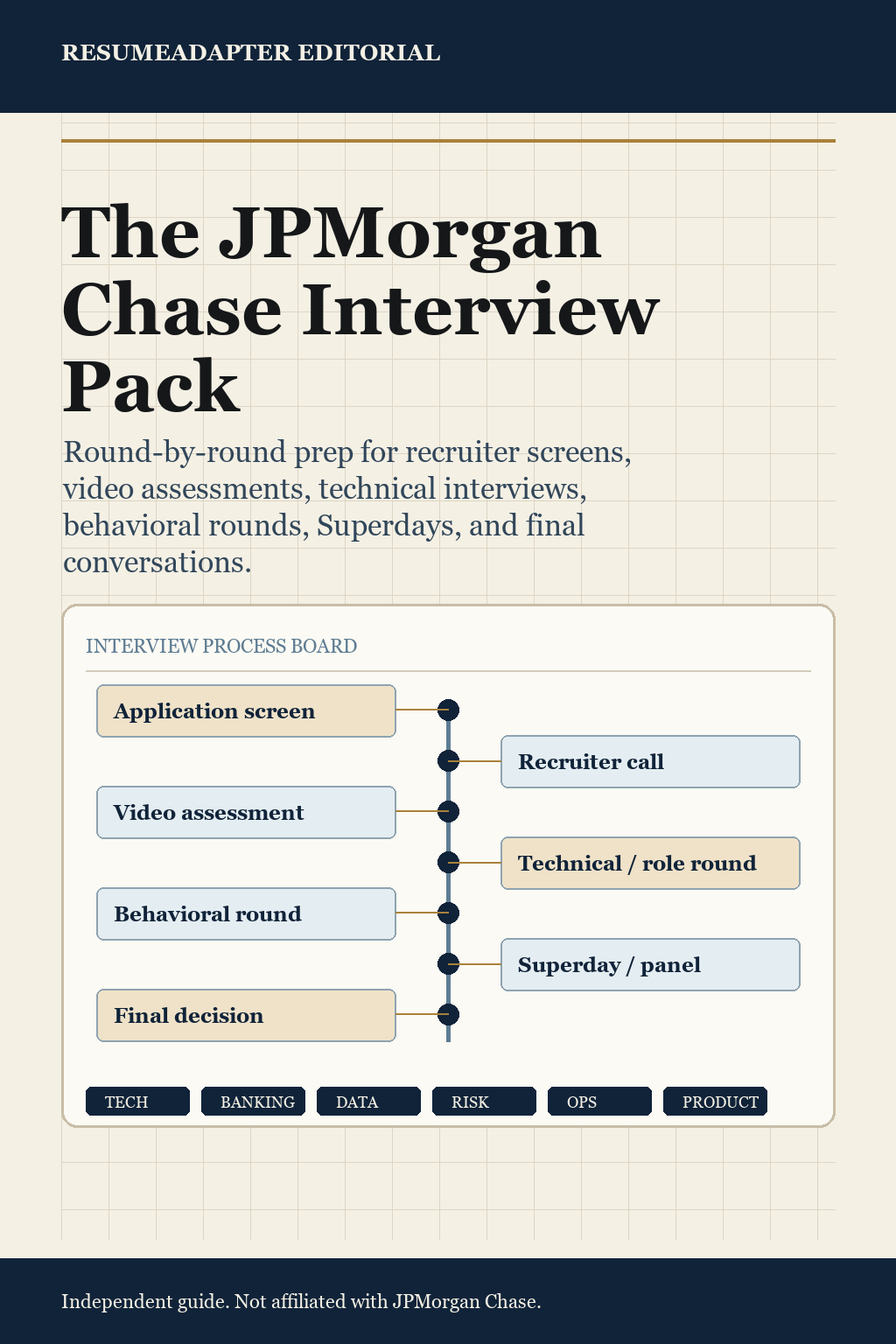
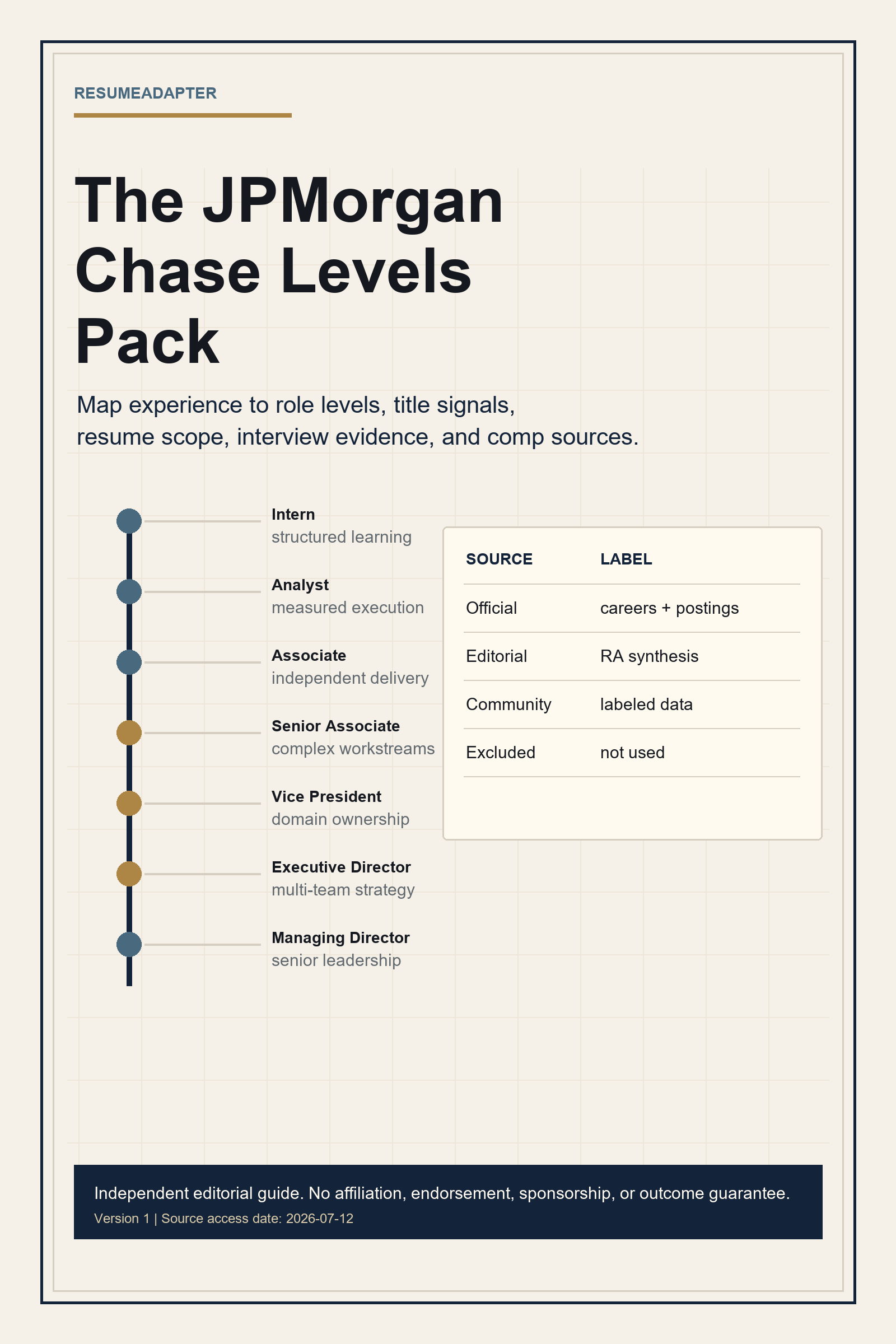
You do not need to name a single principle on the page. You need bullets where client impact, operational rigor, risk discipline, integrity, and team lift are visible in the outcomes themselves. See the JPMorgan levels spoke for how the bar shifts from analyst to managing director, and the JPMorgan interview process spoke for how these principles surface across the loop.

FAQ

JPMorgan business principles, FAQ

The questions candidates surface about what JPMorgan actually screens for, after they have read the pillar. Answers are byte-identical to the FAQPage JSON-LD, because AI engines that extract HTML and AI engines that extract JSON-LD should not see different text.

What are JPMorgan's business principles?

JPMorgan publishes Our Business Principles: 20 numbered principles grouped under four tenets. The first tenet, Exceptional Client Service, opens on we focus on the customer. The second, Operational Excellence, runs from setting the highest standards of performance through demanding financial rigor and risk discipline and always maintaining a fortress balance sheet, to executing with both skill and urgency. The third, a commitment to integrity, fairness and responsibility, opens on we will not compromise our integrity. The fourth, a great team and winning culture, covers hiring and retaining great, diverse employees, building teamwork, an open meritocracy, honest communication, and striving to be good leaders. The 20 principles are the firm's published cultural framework.

How many business principles does JPMorgan have?

JPMorgan has 20 Business Principles, numbered 1 through 20 and grouped under four tenets. The grouping is uneven by design: Exceptional Client Service holds principles 1 to 3, Operational Excellence holds the largest set at principles 4 to 10, the commitment to integrity, fairness and responsibility holds principles 11 to 15, and a great team and winning culture holds principles 16 to 20. The firm publishes the full list on jpmorganchase.com and in an official one-pager.

What are the 4 tenets of JPMorgan's business principles?

The four tenets are: Exceptional Client Service, Operational Excellence, a commitment to integrity, fairness and responsibility, and a great team and winning culture. The 20 principles sit underneath these four headings. Client service comes first and frames the firm around the customer, Operational Excellence is the largest tenet and carries the fortress-balance-sheet standard, the integrity tenet covers not compromising integrity and facing facts, and the team tenet covers hiring, teamwork, meritocracy, communication, and leadership.

Does JPMorgan have core values?

JPMorgan's published cultural framework is Our Business Principles: 20 principles under four tenets, which function as the firm's stated values. A common point of confusion is Make dreams possible for everyone, everywhere, every day, but that is Chase consumer-brand marketing, not the JPMorgan Chase firm purpose, so do not cite it as a firm value. When you want to speak to what the firm stands for, cite the principles and the four tenets, which are the framework the firm actually publishes and screens its culture against.

How do I show JPMorgan's principles on my resume?

Demonstrate the principles through quantified outcomes rather than naming them. Show client impact you can measure for client service, a precise efficiency or quality improvement for operational excellence, a risk you measured and contained for financial rigor, a costly honest action for integrity, and a team result you lifted for the winning-culture tenet. Use STAR-style bullets so each principle is visible in the work itself, give examples across banking and technology, and scan your resume to see which signals a JPMorgan recruiter would actually find.

Is the heritage quote about first-class business one of JPMorgan's principles?

No. The line attributed to Jack Morgan in 1913, the idea of doing only first class business, and that in a first class way, has been before our minds, is heritage, not one of the 20 Business Principles. The popular short form, first-class business in a first-class way, is a paraphrase, so quote the exact sentence if you use it. The 20 numbered principles under four tenets are the current published framework. Use the heritage quote as context, and demonstrate the principles through quantified outcomes rather than quoting either as a principle.

Engineer your JPMorgan resume

Run your resume against
a JPMorgan job description.

Get your match score against the JPMorgan posting, the principles your bullets state as adjectives instead of demonstrating, the generic phrasing that hides your client, risk, and team impact, and a rewrite plan. Free to scan; no signup to see the score.

Your resume stays yoursAnalyzed in seconds, then deleted. Never stored. Never used to train AI.JPMorgan job description scored